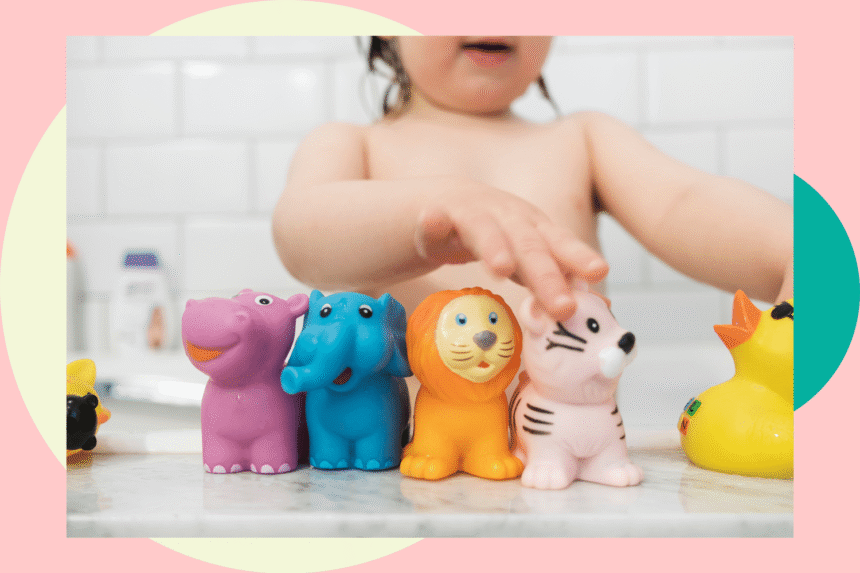
If you’re like most parents, you may have some concerns about the bath toys your child shoves in their mouth during bath time. You may have seen the tell-tale signs that when toys are blown onto the walls of a bathtub, they develop dirt, grime, and even mold.
Fortunately, there are safe and effective ways to not only clean your child’s toys, but also extend their lifespan and prevent mold. Below, cleaning experts and pediatricians explain the best ways to clean bath toys and tips for keeping them fresh for as long as possible.
make a bleach solution
If you think you have mold growing inside your child’s bath toys and want to remediate them, the most effective cleaning method is to use a diluted bleach solution. Be aware that bleach is harsh and can damage toys.
“Bleach is effective because it kills bacteria and mold,” says Jonathan Jassey, DO, FAAP, board-certified pediatrician and founder of Concierge Pediatrics.
Precautions
Bleach is highly toxic, so extreme care must be taken to ensure that the solution is strong enough to kill mold, but not so strong that it poses a danger to children. Also, rinse the toy thoroughly before giving it to your child.
For basic cleaning of toys, Kristin DiNicolantonio, MA, senior director of stakeholder communications at the American Cleaning Institute, suggests making a solution of 3/4 cup chlorine bleach in 1 gallon of water.
“Use this solution to scrub the toys. Be sure to wear protective gloves and old clothing to prevent bleach from damaging your clothes,” says DiNicolantonio. “Make sure the space is well ventilated. For hollow toys or toys designed to hold water, be sure to squeeze out all the liquid. After cleaning the toy, leave it wet for 5 minutes, then rinse the toy in a clean sink and let it air dry. ”
Use hydrogen peroxide spray
If you’re looking for an alternative to bleach or want a cleaning method that can be used more frequently, try making a spray with hydrogen peroxide. Although it’s not as strong as bleach, researchers have found that it fights many microorganisms. For example, it is effective in removing viruses, fungi, spores, and bacteria. To use, simply select a container of 3% hydrogen peroxide and add it to your spray bottle.
“Hydrogen peroxide is an alternative to solid bleach,” says Taylor Riley, a father, cleaning expert and partner at Germsmart Commercial Cleaning in Brooklyn, New York. “Just put it in a spray bottle and apply it directly to the toy. Leave it on for 10-15 minutes, then rinse thoroughly.”
Related articles
use the dishwasher
Another option for cleaning and disinfecting toys is to use the dishwasher, said Force of Nature cleaning expert Lana Tkachenko. “For hard toys, place them in the top rack of the dishwasher, run a hot water cycle, and heat dry. First, check to see if the toy is labeled dishwasher safe.”
For soft bath toys, she suggests using a lingerie bag and washing them in hot water on a gentle cycle. Allow to air dry completely before storing. You can also choose commercially available disinfectant sprays, she says. “This is an easy way to add an extra layer of protection without introducing harsh chemicals.”
Choose a washing machine
According to DiNicolantonio, you can also use the washing machine to clean bath toys. Make sure it’s machine washable, then place the toy in a mesh laundry bag or pillowcase and secure the top.
“Wash on a gentle cycle using cold water and regular detergent or laundry sanitizer,” she says. “Once the wash cycle is complete, dry on the counter or in the sun until completely dry before storing.”
Please wash your hands with soap and water
For daily cleaning, you can disinfect bath toys with soap and water, says Dr. Jassy. Simply add a few squirts of hot water and dish soap to a sanitized sink, basin, or container.
Carissa Whitman, mother of two and mom blogger at MomAfterBaby.com, says she uses this method often and recommends scrubbing, rinsing, and air drying each toy. If you soak the toy in water, you need to squeeze out the excess water. Also, if using very hot water, consider wearing gloves to protect your hands from the heat.
Make baking soda paste
Dr. Jassy says some people make a gritty paste with baking soda and use it like a scrubbing brush. One way to do this is to mix 1/2 cup of baking soda with a few tablespoons of water. You may need to adjust the proportions until you have a paste that you can spread over the toy.
Baking soda is non-toxic and makes an excellent cleaning agent. Studies have also shown that they are less likely to cause asthma and other respiratory problems. However, be careful when applying it to bath toys, as it can be abrasive. You don’t want to damage the toy or scrape off the protective coating when cleaning.
Soak in white vinegar
Riley says white vinegar is also a natural cleaner that can be used to clean bath toys. “Mix 1 cup of vinegar to 1 gallon of warm water and let the toys soak for about an hour. Then just rinse and dry.”
Riley says the acidity of vinegar helps break down slime and prevents mold from forming. Additionally, it is a non-toxic option and will not cause any harm to young children.
How to prevent mold from growing on bath toys
One of the best ways to prevent mold from growing on your toys is to prevent it in the first place. You should also clean your toys regularly and remove anything that looks better than before, Riley says.
“Aim to clean your bath toys once a week, but they typically need to be replaced every three to six months,” he says. “It’s also important to remember to make sure the toy is completely dry after each use.”
Here are some additional tips from experts to prevent mold growth.
- Clean bath toys regularly
- Squeeze out excess water after each bath
- Store toys in mesh bags or racks that allow ventilation and drainage.
- Avoid toys with holes, or consider sealing any holes with hot glue.
- Make sure bath toys are not placed in stagnant water
- If someone is sick, disinfect all toys immediately after bathing
“If there’s mold and you can’t clean it, throw it away,” says Dr. Jassy. “If it smells, clean it or throw it away. Choose non-porous toys with no holes to prevent water from getting in. (Also) consider rotating bath toys to give them more time to dry. You don’t have to use the same toys every bath.”
Risk of mold growing on bath toys
Mold in general can make children sick, says Dr. Jassy. “If a toy has mold and a child touches it, inhales it, or blows water into their mouth, it can cause respiratory illnesses, rashes, allergy issues, gastrointestinal infections, and eye infections.”
But he says he has never seen a case like this in his nearly 20 years of pediatric practice. Still, you may need to be careful. Dr. Jassy suggests looking for toys that are nonporous or machine washable, as they are easier to clean and less likely to grow mold.
“Parents often assume that if a toy looks clean, it’s clean,” Tkachenko says. “However, mold can easily grow inside squishy toys where you can’t see them. If in doubt, it’s better to replace the toy than expose your little one to mold.”