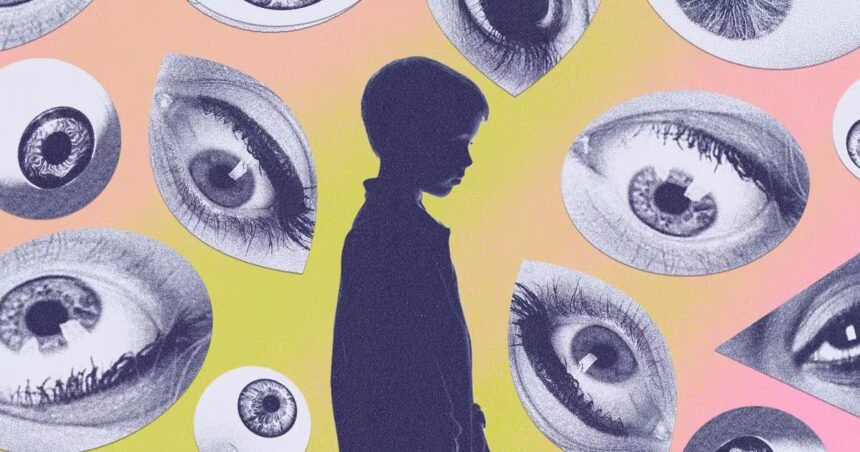
“Damn. Why don’t you teach him some manners?” she said, staring at the teenager who was with me outside Lifetime Fitness.
I was 23 years old. He laughed because he hadn’t done anything wrong. He limped across the sidewalk, clearly still wearing comfortable shoes. He was regulated. he was happy And even back then, before I had learned the language of sensory processing and had my own diagnosis, I knew that was more important than what she called “appropriate.”
This was not unusual. It’s one out of millions. Caregivers and parents of children with autism are trying to live in a world that was never built with their children in mind. I’m tired. to be honest? That’s ridiculous.
It’s like at some point all the critical people of the world got together and decided what was “good”. Eye contact. Quick response. correct tone. appropriate distance. The right kind of play. What if you don’t quite fit that checklist? That’s rude. you are wrong. you have a problem.
And somehow…we all followed suit.
It applies to everyone, regardless of diagnosis. Familiar things feel safe and comfortable. So people panic when their child doesn’t respond to cues or makes unusual movements. They don’t say, “I don’t know.” They say, “Please fix it.”
And these words sting deeply, whether you’ve experienced it as a caregiver at the grocery store, the park, or elsewhere. All of us in the autistic community and those who love them deserve to be treated the same.
And what is the price of looks and disapproval? It’s heavy. Parents and caregivers walk away feeling criticized, as if they’re failing at something they’ve already put their all into. And what about the children? they feel it too. You don’t need words to feel disapproval. The stares, the ridicule, the change in energy, everything arrives. Especially for people with autism, including those who cannot speak.
The teenager knew exactly what was going on. She didn’t need to make eye contact or say a word to know she wasn’t safe. Autism does not mean unconsciousness. Not talking doesn’t mean not knowing.
they see it. they feel it. they carry it.
So, this Autism Awareness Month, can we stop asking our autistic children to get better? Stop judging and start asking ourselves to be better? How to stay curious and avoid impulsive summarization?
Because the goal should never be to “reduce autism.” The goal is safety. Affiliation. Understand. We don’t need better kids. We need better people and a broader definition of what is “good.”
Me Lovey She is a mother, a children’s author of the “My Brother Otto” series, and an autistic person living in Salt Lake City. She can be found as a speech therapist and friend, playing and working with neurodivergent children, or writing and planning big things while sipping an Americano in the second booth of a local coffee shop overlooking the Wasatch Mountains. Meg believes that the essence of life is understanding, loving, and welcoming others (i.e., not caring about humans).