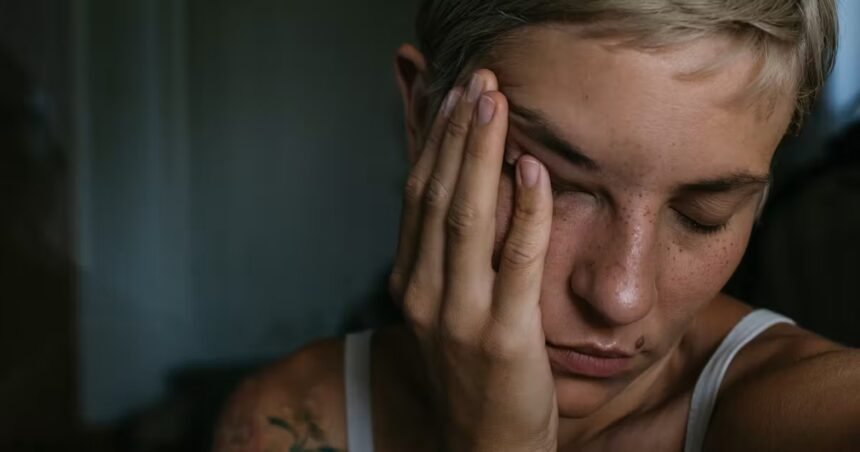
When my son was 2 years old, the joint pain he had been suffering with suddenly worsened. I realized that something new was happening to my body as well. I was so tired to the bone that no amount of sleep would recover. I was always out of breath at home and felt dizzy walking from room to room. As a boxer, I knew my cardio was at its limit. This shouldn’t have happened. The once or twice weekly headaches turned into daily skull-pounding pains that started every afternoon and grew in intensity until bedtime. It was getting harder and harder to work and take care of my son, and I started to feel like I wanted to do literally anything other than crash into bed.
According to the CDC, approximately 70 million Americans, or 1 in 4 people, live with at least one disability. Only about 6% of people with disabilities use mobility aids, such as canes or wheelchairs. The vast majority of those 70 million people have invisible illnesses, illnesses that affect their ability to function, but they would never know unless they are told. I had no idea I was one of them until my symptoms became so severe that I found it difficult to function.
By the time my son was 4 years old, I had been diagnosed with hypermobility Ehlers-Danlos syndrome (hEDS), a genetic connective tissue disease, in addition to fibromyalgia and postural orthostatic tachycardia syndrome (POTS). Fibromyalgia is a central nervous system disease in which the brain amplifies existing pain or causes pain in areas that have no physical reason. POTS affects the autonomic nervous system, making it difficult for the brain to properly regulate all the “automatic” functions that the body performs without conscious awareness, such as breathing, heart rate, temperature regulation, and digestion.
I knew there was something wrong with my joints, but I didn’t realize how messed up my brain was. But like a diagnosis, having a name for my symptoms has helped me understand how widespread they are and how much they affect my daily life. For a long time, I suffered from many seemingly unrelated health issues, from period pain to daily tension headaches, and now I know that hEDS is the cause of them all.
daily challenges
I don’t know what else to say. When I’m awake, I feel pain. Something hurts every minute of every day, whether it’s joint pain, muscle pain, headaches, or temporomandibular joint pain. Ibuprofen helps a little, but it only makes you feel better.
Then there’s fatigue. If you’ve never felt tired, it’s not the same as fatigue caused by lack of sleep. Fatigue is fatigue that goes to the bone and cannot be recovered no matter how much sleep you get. When you’re tired, your brain doesn’t even have the energy to regulate your thoughts and emotions. I end up crying randomly and my thoughts can get pretty dark. I feel like I can’t access my individuality and feel like I can’t feel joy. There is nothing good to eat, see, or do. I can’t even pay attention to anything, like a show or a book that’s long enough to kill time.
POTS is what makes my daily life the most difficult. Simple tasks like picking up toys, carrying laundry up the stairs, or vacuuming make you feel dizzy and short of breath. Sometimes my vision becomes blurry or a little dark. You can’t chase your kids around or play soccer in the yard. You may be able to do these things even in pain, but this is not possible if your autonomic nervous system does not allow it.
(P.S. Having these issues doesn’t mean the rest of normal life’s aches and pains go away. Your daughter still has menstrual cramps, just like everyone else.)
unpredictability
These symptoms never really go away, but all three of my symptoms come with flare-ups. It is a period of time when symptoms worsen after certain triggers or sometimes randomly. Some triggers, such as alcohol, can be avoided. Other issues are not, like being overstimulated (there’s only so much you can do when you live with a 5 year old).
It’s hard not knowing how you’re going to feel from week to week, day to day, or even hour to hour. It means plans go haywire, telling your son, “Sorry, mom can’t do it right now,” and even ignoring promises you made to yourself. There’s no such thing as betting on the future… When your health hits rock bottom, you stop expecting your body to be trustworthy and start planning through the lens of, “Would it be okay to do that, or would it be okay to cancel, if the worst happens?”
administrator
We know that everyone on earth is busy, but parents especially have little time for themselves. Personally, I would love to get back the time I was wasting on my shitty job as a healthcare administrator. Health management is basically my part-time job.
Making appointments, filling out new patient paperwork, researching symptoms and treatments, picking up prescriptions, texting doctors, gathering paperwork for insurance claims, going to appointments, and practicing physical therapy all eat up a lot of your time during the week. I feel like I’m constantly spending so much time and money (even with insurance) doing the work of people who are basically supposed to be helping me, yet all of it just makes me feel a little better.
guilt
Having a chronic illness can have a huge impact on family relationships. My husband is very supportive and has never once complained about picking up my slack on my bad days. However, I often feel the urge to “make it up to him” in my heart and go above and beyond to clean, prepare meals, and do other household chores whenever I can. Pushing myself like this sometimes led to angry outbursts. I had to accept his support and try to understand that it was not conditional. He does it because he loves me, want He wants me to rest, not because he expects me to pay him back later.
My five-year-old would probably find it most difficult to explain my chronic illness. Because chronic diseases are invisible and very complex in nature. But honestly? He has kept everything on track. The first few times I had to set boundaries, I definitely got some pushback, like, “Sorry, mommy can’t chase me outside.” But over time, he learned how to make accommodations without me having to ask.
Even when my body hurts and I can’t play while sitting on the floor, he always tells me, “It’s okay!” Then bring the toy to the couch. When I was tired and couldn’t think of a conversation for the Pokemon figure he wanted to battle with me, he would pick up the remote so we could watch a movie and hug each other. I feel guilty and feel like I’m always saying no to him, when in reality I’m often saying yes in ways that don’t burden me. That’s fair and important for kids to learn. I hate toxic positive thinking and thoughts like “I’m grateful for my condition because it made me a better person,” but I’m proud to see him adapt so flexibly to the needs of others.
Logically, I know all these things, but feeling I still feel guilty. I will probably continue to do so because I will continue to love my family and want to give everything to them. I’m just trying to deal with it when it happens, but this is just another symptom among all the others and doesn’t reflect anything I did wrong.