If you or someone else has ingested kratom and is experiencing symptoms of concern, or if a child or pet has ingested kratom or an unknown substance, call a poison control center (1-800-222-1222) or dial 911.
Last week, the CDC released new findings showing an approximately 1,200% increase in kratom-related exposure reports to the U.S. National Toxic Substances Data System between 2015 and 2025. If you don’t know much about what kratom is or whether it’s easily accessible, you may not need to worry too much about this number. It’s a herbal compound with opioid-like effects that experts warn can be addictive and can cause serious medical problems, including liver toxicity, especially in teenagers. Here’s what parents need to know about the CDC report and a quick primer on kratom if this is your first time hearing about it.
According to a recent report from the CDC, over the past 10 years, U.S. poison centers have recorded 14,449 kratom exposures. There were probably many more cases in which kratom users experienced unreported negative outcomes. A 2024 study estimated that nearly 2 million Americans use kratom on a regular basis. In 2015, there were only 258 calls related to kratom, but by 2025, that number has jumped to 3,434. And it’s not just calls and reports, the number of hospitalizations has also skyrocketed, from 43 in 2015 to 538 in 2025. The number was even higher for patients who took kratom with other drugs (alcohol, cannabis, opioids, and even prescription drugs like benzodiazepines).
What is Kratom and what does it do?
Kratom is an herb obtained from the leaves of a tropical tree native to Southeast Asia. Kratom products are typically sold as stimulants or mood enhancers in a variety of forms, including powders, loose-leaf teas, capsules, tablets, and concentrates.
According to the National Institute on Drug Abuse (NIDA), the compound produces stimulant-like effects at low doses and opioid- or sedative-like effects at high doses. Users report feeling like their heart beats faster, they have more energy and alertness, or they experience relaxation, pain relief, or even confusion.
What are the risks of using kratom?
Although the herb may sound safer than things like opioids, experts say kratom can be just as addictive as the real thing.
“We know that the chemicals in kratom have effects that are very similar to opioids such as morphine, so regular use of kratom can lead to things like addiction. Of course, this is a particular concern because if you become addicted to something like kratom, you can develop dependence and withdrawal syndromes,” Dr. Anthony Jaworski, director of the Poison Control Center at Children’s Hospital of Philadelphia, told Scary in an interview. Mom last August.
According to NIDA, side effects from consuming kratom can range from mild to severe. Some users say it causes nausea, constipation, dizziness, and drowsiness. Doctors have reported seeing patients who experienced tremors, seizures, and decreased breathing after exposure to kratom. Regular, long-term use of kratom is associated with liver damage. A CDC report last week found that about half of those who took kratom with other substances required hospitalization.
Jaworski was particularly concerned about the use of kratom by teenagers and how they are influenced by social media ads and talent to try it. CDC data also suggests that the country’s youth mental health crisis and the availability of kratom may be colliding dangerously. “Previous studies have shown that approximately one-third of kratom users meet criteria for another substance use disorder, and approximately two-thirds report using kratom to manage depression or anxiety,” they wrote.
Is kratom legal?
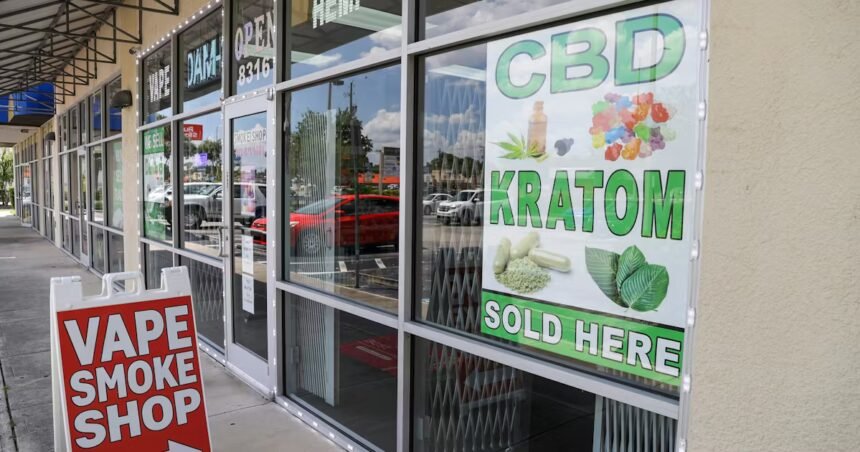
The sale of kratom is prohibited in only six states: Alabama, Arkansas, Indiana, Louisiana, Vermont, and Wisconsin. Twenty-three other states have some form of regulation on the sale of kratom, including stricter licensing for retailers and age limits for purchasing. Last July, the FDA added 7-OH, a concentrated kratom byproduct popular among young people, to its list of controlled substances, declaring it would take action to ban its sale at the federal level. For now, kratom is sold at gas stations, smoke shops, and even some grocery and health food stores. It is also widely available online.
Because there are no federal regulations to protect teens and young adults, experts recommend parents talk to their children about the dangers of kratom. Although it can be difficult to keep up, Jaworski recommends reading what ads are posted in vape shop windows as you drive by. Google it, read it, and see how easy it is to buy it yourself. “If I can easily see this and buy this product, there’s a very good chance that teenagers can do the same,” he said.
Parents also need to instill a healthy dose of skepticism in their tweens and teens, he advises. Explain that just because a product is on a store shelf does not guarantee it is safe. Finally, Jaworski recommends modeling a healthy relationship with substances for yourself.