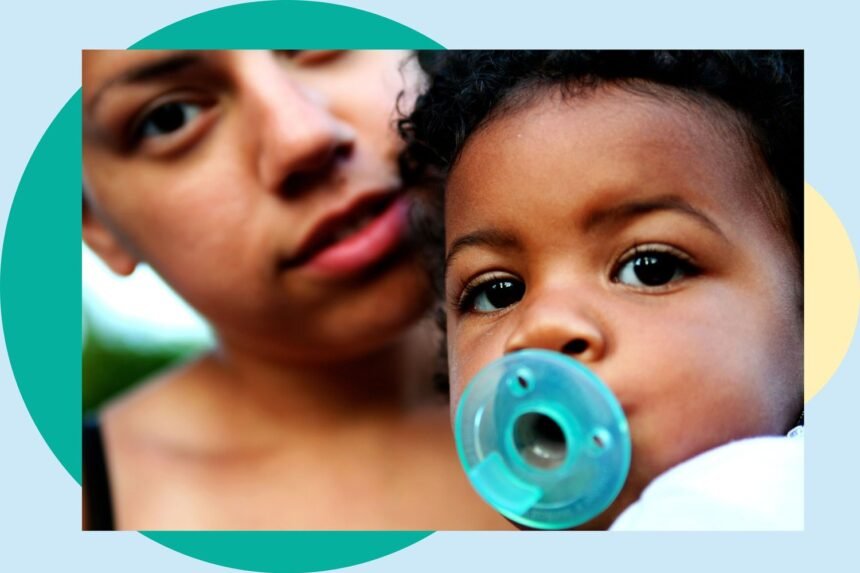
Opinions are divided on the effectiveness of pacifiers, with some praising their immediate benefits and others worrying that they may cause long-term problems with dental and speech development.
Much is still up for debate. However, while choosing the right pacifier may not necessarily be a problem in itself, there is a consistent problem with many parents feeling stigmatized for using a pacifier on their child.
New research from baby brand MAM reveals that 15% of UK parents feel criticized for giving their child a pacifier, and 63% of parents have experienced some form of criticism regarding pacifiers in their early years of parenting.
Strangers are the most vocal critics, with 36% feeling criticized by strangers, followed by other parents (30%), friends (20%) and their own parents (18%). About 14% say they have even faced pushback from their partners.
Dr. Carolyn Solo, LCSW, therapist and owner of Integritas Wellness and Recovery LLC in Pennsylvania, acknowledges that “parenting in public” can make mothers and fathers feel vulnerable. She’s not surprised that society makes parents feel guilty about something controversial, whether it’s reasonable or not.
“When your decisions don’t align with your children’s choices, whether it’s whether to breastfeed, choose sleep training or co-sleeping, or let your child use a pacifier, it can feel like there are ‘camps’ on both sides, and they’re coming at you,” she says.
“In my opinion, there is no ‘right’ way to make parenting decisions. However, the message that parents, especially mothers, always receive is that there is a lot at stake in every decision, and that there is actually a ‘right way’ to do it.”
Despite this, MAM’s research found that 28% of parents reported taking away their child’s pacifier because of someone else’s negative opinion, proving that many of the assumptions do occur.
What is the problem with “pasis”?
Although pacifiers are commonly used with infants (approximately 58% of Americans give their babies a pacifier from birth), little is known about their long-term effects. However, the American Academy of Pediatric Dentistry supports the use of pacifiers based on the infant’s needs and parent preference.
Their policy states that pacifiers may have the following effects for the first few months:
- Helps develop the sucking reflex in premature babies
- Provides comfort and peace to your baby
- Provides analgesic effect during mildly invasive procedures
- Reduced incidence of SIDS
- Preventing persistent thumb sucking habits
So why are pacifiers constantly under attack? Morgan Dixon, LMFT, family therapist and clinical care coordinator at Space Therapy in Los Angeles, says they’re a natural parenting choice.
“Pacifiers are one of the few tangible things we can point to and talk about,” she says. “They’re things that are observed by mothers-in-law and coffee shop baristas. It can feel like a tangible expression of a parent’s values, choices, and successes or failures in caring for these little beings they love.”
Emotional depression in parental decision making
Many parents continue to hold themselves to impossibly high standards when it comes to decision-making, and are harsh on themselves for not making the “right” decisions (raise your hand here!).
These pressures are clearly having a negative impact on our health. The MAM survey found that 27% of parents actively avoid public places and social events to prevent criticism, while a quarter (19%) of parents surveyed admitted to having to force themselves to go out.
A further 16% confess to feeling self-conscious in public. This is an annoying burden for parents who are already struggling with the constant demands of parenthood.
“Modern American mothers tend to feel an overwhelming sense of responsibility and pressure to optimize caregiving and get it right,” Dixon said. “The reason is that there are some very persistent narratives that suggest how you care for your children and the choices you make will determine how they grow up and the kind of people they ultimately become.”
deal with critical voices
Even given the weight of the resulting parenting decisions, Dr. Solo says there’s no need to take that oversight seriously.
“Strangers can be subconsciously embarrassed by parenting decisions that don’t align with their own and wonder, ‘Did I do the right thing?’ I also think family and friends can be especially harsh towards other mothers, because often when someone makes a parenting decision that doesn’t align with their own, they (subconsciously) feel like they’re being judged and scrutinized.”
So it’s safe to say that many of us are in the same situation here. Dixon urges parents to be kind to themselves and each other. And remember that the early years of parenting mean a period of growth.
“Parents and their babies are born at the same time and grow in and through their relationship with each other. This interaction is a process. So as the parental part of you emerges, you will need to negotiate the voice you let in (as with many other things).”
Dixon also emphasizes that our own voice is the one we should pay most attention to as we grow.
“Learning to connect with yourself, where you are, where you lean, what you know and what you don’t know, everything is very helpful when accepting other opinions, especially critical ones.”
Remember that you know your baby best. If you or your child need help, please contact your health care provider. you are never alone.