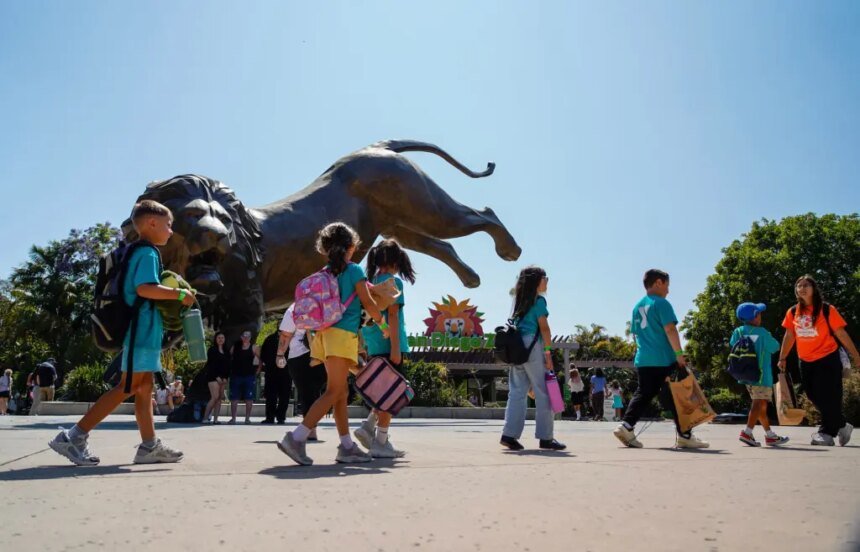
The backlash to the new parking fees at Balboa Park has been so strong that it now appears that San Diego’s elected leaders may suspend them for city residents. This is a welcome development, because the fees are a symptom of a greater disease. This pay-to-play model for public enjoyment of outdoor spaces, which has taken over the natural gem at San Diego’s urban heart and threatens other spaces like the San Diego Zoo and city beaches, is not just a bummer for your wallet, but for some may be the difference between healthy lifestyle habits and future hospital stays.
As a local pediatrician, I have seen the way that safe parks and green spaces can provide immeasurable benefits to both physical and mental health. By virtue of being free and publicly accessible, parks provide easier access to and opportunities for physical activity, support active lifestyles, foster social cohesion and can even encourage healthy eating habits. Connection to nature helps to decrease stress and cortisol levels and improves happiness and well-being. All of these factors are important in the prevention of many chronic conditions in adults such as obesity, heart disease, diabetes, depression and anxiety.
For kids, the positive impacts of access to safe green spaces can start before they are born and may last a lifetime. Studies indicate that mothers who live in greener neighborhoods generally give birth to higher birthweight babies, who face less risk of complications such as infection and breathing problems than low birthweight babies. In early childhood, a critical period of development, children with access to green spaces have better balance and motor coordination, better sleep, fewer behavioral and social problems, and reduced nearsightedness. Through middle childhood and adolescence, access to green spaces has been linked to better academic performance, better ability to cope with stressful events, improved attention and lower blood pressure. Ultimately, healthy, happy children are better equipped to grow into healthy, happy adults.
It is well-documented that habits related to health start in childhood and compound into difficult-to-treat health issues in adults. These health issues disproportionately impact children who come from lower socioeconomic backgrounds and marginalized racial and ethnic groups, as they are less likely to have access to safe parks and playgrounds, and more likely to live in areas with greater exposure to traffic-related air pollution, high heat exposure and flooding. In San Diego, historically discriminatory practices in city planning led to the establishment of parks in predominantly White neighborhoods, and decades of inequitable planning and housing practices have only made it more challenging for those in densely populated and lower-income areas to gain access to safe green spaces. Low-income neighborhoods have access to approximately 85% less park space than high-income neighborhoods in San Diego, an astonishing and, frankly, shameful figure for “America’s Finest City.” The parking fees in Balboa Park are yet another hurdle imposed upon those in our community who may already face significant barriers to being able to enjoy the outdoors, and the health and wellness of children may suffer as a result.
On their end, Mayor Todd Gloria and the City Council members responsible for approving the parking fees suggest that the revenue will help create a sustainable funding source for maintenance and operation of the park and other spaces. Indeed, beyond green space, Balboa Park is also a place for learning and cultural enrichment. Yet destinations like the Air and Space Museum, Fleet Science Center and Youth Symphony may soon face limited reach and accessibility to those who cannot or will not engage in the city’s pay-to-play game. And what’s more is that it is all too clear that City Hall feels comfortable placing the burden on the backs of those who already give Balboa Park life: the children, young people, families and older adults who explore the gardens, visit the museums, dance and sing in the theaters, and volunteer in the many cultural centers.
What was once one of the country’s oldest parks dedicated to public recreational use is dedicated to the public no more: Parking fees will act as a barrier to entrance that not all will be able to afford, and our children will suffer the most. Early establishment of healthy lifestyle habits, connection to nature, and appreciation for learning and culture shouldn’t be pay-to-play, and especially not for those who have no choice in the matter.
But for the city, money has to come from somewhere. San Diego elected leaders: Is the health and wellness of our children, families and neighbors enough to make up for your budget deficit?
Pham, a pediatric physician, is a resident of San Diego.