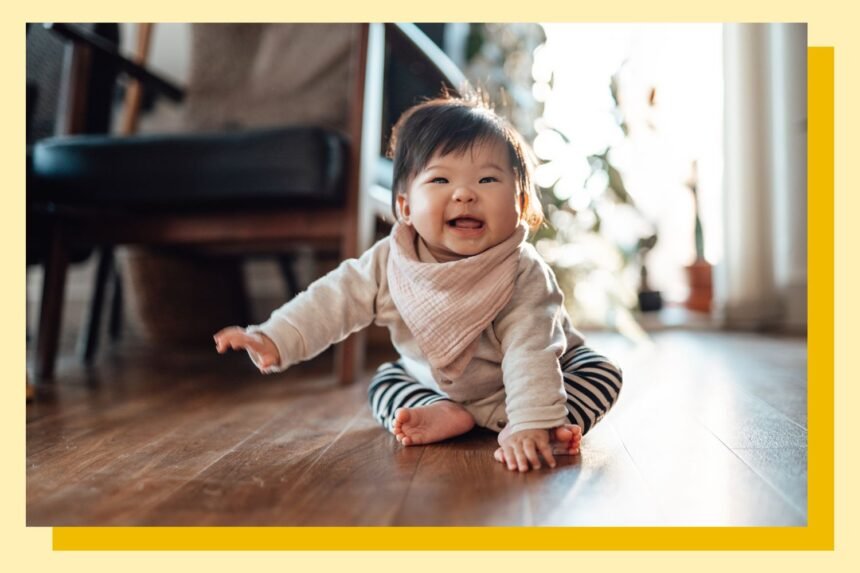
Scientists have long thought that babies’ brains are not developed enough to form memories. But in a new study, researchers have discovered that children as young as one year old can create memories. These findings suggest that infantile amnesia, or the inability to remember the first few years of life, may be related to memory recall and retention rather than memory creation.
Scientists believe that the hippocampus, which is essential for remembering certain events in adults, takes a long time to develop and may not be able to support memory in infants, said Tristan S. Yates, Ph.D., lead author of the study and a postdoctoral fellow in Columbia University’s Department of Psychology.
“By showing that the hippocampus is involved in the formation of babies’ memories, our study shows that certain memories can enter babies’ brains,” Dr. Yates says. “Then why we don’t remember things from when we were babies may have something to do with that memory being lost or becoming inaccessible over time. Other research suggests that perhaps the latter possibility is true, that our memories of our babyhood may still exist but be hidden from access.”
How did researchers discover babies’ memory abilities?
Dr. Yates said the research team used functional magnetic resonance imaging (fMRI) to examine the brains of babies as they looked at pictures of outdoor locations, human faces, and toys.
“fMRI is a safe technique that measures blood flow in the brain as an indicator of brain activity,” explains Dr. Yates. “When neurons in the brain become active, blood flow to those neurons increases, which can be measured by changes on an MRI.”
Prior to this study, the team had developed a method to perform fMRI on awake infants. This background has allowed them to build knowledge about baby brain imaging.
“If you’ve ever had an MRI yourself, you know it’s very loud and you have to stay still and follow the instructions, all of which can be incredibly difficult for a baby,” Dr. Yates says. “We take a baby- and parent-centered approach to our research by making adjustments to the typical MRI environment, such as keeping the parent in the room at all times, wrapping the baby in a comfy pillow, bringing toys, bottles, blankets, and pacifiers into the room, and showing fun movies in between brief tasks.”
In this study, she says, her team showed babies a psychedelic background to keep their attention. Then, on top of that background, we showed a series of pictures that the baby had never seen before, including a dog toy, a mountain, and a woman’s face. About a minute after viewing each photo, the babies’ reactions were measured by showing the same photo next to a new photo in the same category.
“We expected babies to see more of the same pictures they had seen before, indicating that they remember the first time they saw them,” Dr. Yates says. “And when babies looked closely at pictures they had seen before, we found increased activity in the hippocampus, suggesting that the hippocampus is involved in memory formation.”
Why is baby memory formation important?
Experts believe that a baby’s memory is the basis of growth and development.
“Children’s memories influence their ability to learn, understand, form attachments, and build relationships with others, which impacts their emotional and social development,” says Marilyn Cross Coleman, LCSW, PMH-C, a perinatal mental health treatment specialist and founder of Shameless Mom Wellness, a private psychotherapy practice for new mothers.
According to Coleman, the memories babies form encode their sensory and emotional experiences, creating an emotional understanding of whether the world is a safe or dangerous place for them. “John Bowlby’s attachment theory demonstrates this by positing that a baby’s early experiences with their caregivers, what we might call their memories, have a profound impact on the baby’s emotional and social development and help determine their ability to form and maintain relationships throughout their lives,” Coleman says.
So while children may not remember specific memories of having their needs met in early childhood, they may come to trust that their caregivers will respond when they are struggling, she says. “They will understand that the world is a safe place for them because their needs are seen as important and met by people who care about them,” she added.
Sanam Hafeez, P.D., neuropsychologist and director of Comprehend the Mind, says early memories also help babies learn basic skills such as moving, speaking, and reacting to different situations.
“Although babies don’t remember those moments later, their early experiences shape the way they understand the world and interact with others as they grow,” says Dr. Hafeez. “Although babies do not retain conscious memories, strong emotional tones and sensory experiences are necessary for brain development.”
What does this mean for parents?
According to Dr. Hafeez, interacting with your baby by talking, singing, and providing physical affection lays the foundation for later memory development. By being attentive, parents can foster secure attachments that influence cognitive and emotional growth in early childhood.
“Babies don’t remember events the way adults do, but they are deeply shaped by their childhood experiences,” Coleman added. “Parents therefore need to focus on their young children’s emotional experiences.”
This means that even if your baby doesn’t remember the exact moment you comforted him, he internalizes the sense of security that that moment brings, she says. This creates a sense of security that allows you to trust the safety of other relationships in your life.
what it looks like in real life
Routines and rituals, like your baby’s bedtime routine, help build a sense of safety and security in your baby. Parents also need to be responsive to their baby’s needs, Coleman says. “When you respond to their needs, you show them that their needs are important,” she explains.
Babies also learn from their parents’ ability to regulate their emotions. “If parents can respond calmly to stressors, babies learn how to respond in the same way,” Coleman says. “This way, babies learn skills to regulate their emotions.”
And be open to making memories with your little ones. Coleman says early childhood experiences have been largely ignored for years because people believe they don’t remember anyway. But just because memories are encoded and expressed differently doesn’t mean infants don’t have them, she says.
“It’s important to remember that babies may not remember the details of their experiences, but their brains and bodies have deep memories of how they were treated,” says Coleman.
Dr. Yates urges parents to remember that babies are probably some of the best learners in the world.
“We know that early experiences are important in laying the foundation for the rest of life, even though many specific memories from infancy do not persist into adulthood,” says Dr. Yates. “This has important implications for how parents can support the development of young children.”