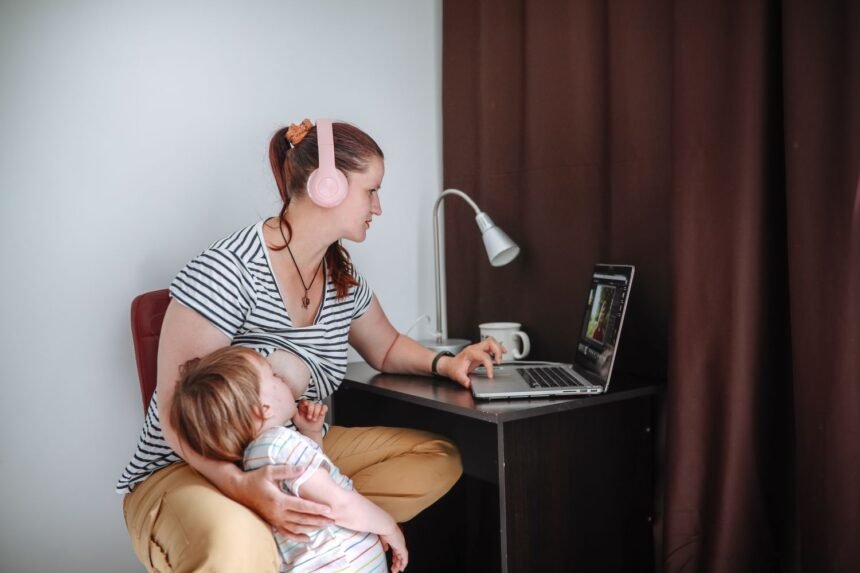
- Breastfeeding your child until they are a toddler can still be seen as taboo, but breastfeeding beyond the age of one can have positive effects on mental health.
- When the child turns 2 years old, breastfeeding becomes more efficient, faster and less frequent.
- However, no matter how long you breastfeed, breastfeeding can be arduous and tiring for parents.
It’s late at night and it’s time for bed, but my two-and-a-half-year-old son is curled up next to me in bed, nestling into my chest with expectant eyes.
She is very strong these days and knows how to break into the “milk bank” whether I am ready or not. Pulling up my sweater, tugging on my shirt.
We both know what time it is and I know she wants milk so I didn’t resist when she started tugging on my clothes. I cherished my breastfeeding journey and still consider it a privilege. But there is also a small part of me that is exhausted.
I don’t feel as tired postpartum these days, but my energy levels don’t seem to be what they used to be. I’m wondering if part of the reason I feel so exhausted may be the extended breastfeeding period. After all, there is no doubt that long-term breastfeeding requires mental and physical stamina.
Here, experts explain what happens to our bodies after two years of continued breastfeeding and what the effects are after the postpartum hormones settle down.
How long do most mothers breastfeed?
I am one of an estimated 11.5% of parents who breastfeed for more than two years.
The World Health Organization (WHO) recommends continuing breastfeeding alongside complementary feeding for up to two years or more. The Dietary Guidelines for Americans recommend breastfeeding for at least one year.
However, statistically very few mothers breastfeed for this long.
According to the Centers for Disease Control and Prevention (CDC), 83.2% of infants start breastfeeding, and this rate drops to 78.6% by the first month of life.
Then, at 6 months of age, 55.8% of infants are still receiving some breast milk, while 24.9% are exclusively breastfed.
Parents make these choices for a variety of reasons, including pain or discomfort during breastfeeding, or simply a personal preference to stop, but as long as the baby is healthy, there is no right or wrong decision.
But for those who continue, breastfeeding has an impact on more than just the baby’s nutritional intake. Prolonged breastfeeding can affect the physical and mental health of breastfeeding parents by affecting hormones, energy levels, and nutrient requirements.
What happens to a breastfeeding mother’s body after giving birth?
The emotional and physical roller coaster of the early postpartum period is real, and breastfeeding can add even more complications.
Nadine Rosenblum, Perinatal Breastfeeding Program Coordinator at Johns Hopkins Hospital, explains that when a baby is born, progesterone (which inhibits breast milk production) decreases and prolactin, which controls milk production, and oxytocin, which triggers the letdown reflex, increase.
“At the same time, the body is recovering from pregnancy and childbirth, redistributing body fluids, increasing metabolic rate, and prioritizing milk production, which is why the early postpartum period is often stressful, both physically and emotionally,” says Matheny.
By 6 to 12 weeks postpartum, mothers often notice a change in their energy.
“The hormonal pattern begins to stabilize, marking the transition from initiation to long-term maintenance of lactation,” Matheny says.
In people who continue to eat, baseline prolactin decreases (though it still rises during feeding) and oxytocin levels become more stable.
“Many mothers notice improved energy and emotional stability during this stage, when the body moves out of the intense early stage and into a more efficient rhythm,” says Matheny.
What will change in the second year?
After about two years, Matheny says, breastfeeding becomes biologically established and becomes much more efficient than in the early months.
Although infants now typically eat solid foods, they continue to receive nutritional benefits from breast milk. Breast milk also contains antibodies that react to bacteria in the environment, supporting the infant’s immune system.
Typically, oxytocin and prolactin continue to support breastfeeding, but with smaller fluctuations and less impact on the body, as breastfeeding is typically shorter and less frequent.
“From a physiological perspective, breastfeeding an infant is much less taxing on the mother than breastfeeding a newborn, so prolonged breastfeeding becomes a maintenance state rather than a period of high biological demand,” says Matheny.
Benefits of long-term breastfeeding
For some mothers, breastfeeding can even improve their mental well-being.
“By early childhood, many mothers may find that breastfeeding has little effect on their daily energy levels and may even find it calming or regulating,” she says.
“The idea that breastfeeding inherently drains a mother’s energy overlooks larger contributors to fatigue, including poor nutrition, chronic sleep deprivation, stress, and the overall mental strain of caregiving.”
Extended breastfeeding can put a strain on parents
Does this mean that the burden on breastfeeding mothers should be ignored? Not necessarily.
“No matter what kind of food you feed your child, parenting is energy-consuming,” says Rosenblum.
Dr. David Gosland, a gynecologist practicing in Orange County, believes that the effort required to breastfeed for long periods of time should not be underestimated.
“At one to two years, we’re not just talking about the calories needed to produce breast milk, but the accumulated sleep debt and physical exhaustion of being on call 24/7 for over a year.”
He says that even if a child only feeds once or twice a day, breastfeeding continues to trigger a hormonal response, albeit at lower levels than in the early postpartum period.
Hormone levels often stabilize over time, but Dr. Gosland explains that hormone levels may not fully reflect pre-pregnancy patterns until breastfeeding is complete.
“Even if your baby only breastfeeds once or twice a day during the first two years of life, breastfeeding is a continuous process. Prolactin increased. “Prolactin is great in milk, but it suppresses estrogen,” says Dr. Gosland, adding that estrogen partially contributes to a woman’s energy.
Estrogen also plays a role in energy regulation, so if estrogen levels remain low for an extended period of time, some mothers may notice persistent fatigue, she says.
“All of this shows us that while the body is a wonderful machine designed to sustain[breastfeeding]we need to recognize that prolongation doesn’t mean ease,” he says.
How to take care of yourself while breastfeeding
If you find yourself feeling exhausted during breastfeeding, experts recommend prioritizing rest and reaching out to your village to help you take a break from breastfeeding.
Dr. Gosland added, “No one should judge you for continuing to do what works for your body and your family. The biggest mistake I see is women ignoring their own fatigue, because we’ve been taught that longer is always better. Breastfeeding should support, not detract from, the health of you and your child.”
Whether you’re breastfeeding or not, if you’re having trouble with fatigue, energy, or general health, be sure to seek medical advice from your health care team.
Remember, you can’t take care of your baby if you don’t take care of yourself first.