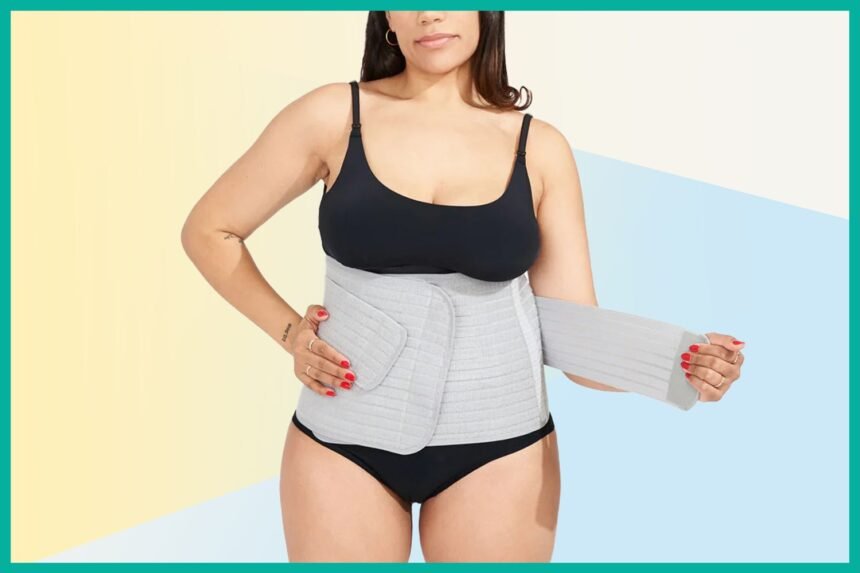
I wish I had known about belly wraps during my first pregnancy. By the end, the pain in my pelvis had reduced me to a snail’s waddle. After giving birth, my stomach was surprisingly loose. The best postpartum belly wraps will aid recovery and provide the support your weakened core muscles need. After a C-section, a belly wrap provides healing compression.
“During pregnancy, your abdominal muscles stretch and your pelvic floor muscles weaken. Gently cradling your abdomen in a postpartum wrap can provide external support at a time when your muscles can’t yet,” says Melissa Dennis, MD, MHA, FACOG, chief medical officer at Partum Health, a Chicago-based maternal care company.
To find the best postpartum belly band, we consulted experts on what to look for and scoured the market to rate each belly band on ease of use, value, comfort, versatility, materials, and more. Ideal for postpartum, a belly wrap supports abdominal recovery, stabilizes the core, promotes proper posture, and reduces back pain. Before using a belly band, consult your health care provider to see if it is appropriate for your particular situation.
our review process
When researching the best postpartum belly band, we consulted several experts and drew on our own experiences as parents. We then evaluated the top options on the market, evaluating support levels, customizability, ease of use, value, size, comfort, materials, and more. We searched a variety of materials, closures, support levels, price points, and size ranges to find an option to fit every need.
our experts
To learn more about how to safely use a postpartum support belly band and what to look out for when purchasing one, we spoke directly to the following experts:
- Melissa Dennis, MD, MHA, FACOG, Chief Medical Officer at Partum Health; The company is a Chicago-based mother and family care company that provides birth and postpartum doula care, mental health support, lactation consultation, nutrition, physical therapy, and childbirth education.
Factors to consider when buying a postpartum belly wrap
Dr. Dennis suggests looking for an adjustable, soft wrap that you can change to suit your needs as you recover from childbirth. Other considerations include:
- Fit and size: Maternity sizes are often based on pre-pregnancy clothing sizes, but most brands offer inch measurements to ensure the most accurate size. If you’re concerned about fit, keep in mind that most wraps are fairly adjustable, but many wraps cannot be returned once opened.
- Comfort and support: The wrap should give a feeling of support, not constriction. Use products labeled for maternity/postpartum use. Avoid waist trainers and corsets. Before purchasing a product, read reviews to see if they mention common problems like riding up, pinching, or sweating. Look for soft fabrics. The Velcro closure can be scratchy, so we recommend wearing a thin shirt under the wrap.
- Ease of use: Some wraps have one strap, while others have multiple straps. Most are Velcro, but some are hook-and-eye or tie-style. Find the right balance between being the most cooperative and not being too onerous. Ease of washing is also something to consider.
- Bulky: Support briefs and single strap wraps create a sleeker silhouette than those with multiple straps. If the wrap is too bulky, you may not be able to wear it, so look for one that is supportive but not uncomfortable.
How to safely use a postpartum belly band
The purpose of a postpartum belly wrap is to support, not restrict. Never feel pressured or compressed, as this can be dangerous. “Tummy tucks are meant for comfort, so that should be your key word when choosing a tummy tuck,” says Dr. Dennis. “Rap should feel like a gentle support, not a vice.”
Be sure to ask your health care provider if a belly band is safe in your situation. You may also consider asking for guidance on the best way to wear it. “Bringing your belly band to the birthing location is a great way to make sure it’s the right size and to make sure you’re using it properly,” explains Dr. Dennis. “Nurses, midwives and gynecologists will be able to safely support your abdomen.”
If you are concerned about irritation of your C-section scar or have sensitive skin, you may want to wear a thin shirt under your wrap. “If the wrap causes discomfort or your skin becomes sensitive to the material, stop using the wrap,” says Dr. Dennis.
Are postpartum belly wraps effective?
Dr. Dennis says that belly wraps can certainly help support muscles return to normal shape and function. She recommends postpartum belly wraps for people who have had a C-section because they can reduce pain and blood loss. Wrapping after a vaginal birth is a personal decision. “I tell my patients that postpartum wrapping or using an abdominal binder are options for comfort and support,” says Dr. Dennis. Research shows it can reduce pain and improve posture. Women from various cultures have long used postpartum belly bands to support recovery.
When should I start and stop wearing a postpartum wrap?
Belly wraps can be worn throughout your pregnancy. The postpartum wrap can be kept in your hospital bag and worn at all times. Most people begin wearing a wrap a few days after giving birth to within 40 days after giving birth. You can stop wearing the wrap at any time, but its usefulness won’t last long once you feel like you’ve managed to tone your core. “Tummy tucks are your bridge to getting through the early postpartum recovery period,” explains Dr. Dennis. “This is not a long-term solution to muscle weakness, and overreliance on it can worsen muscle strength.”
who are we
Olivia Campbell is the editor. parentsan experienced journalist and essayist, and mother of three boys. She is also a New York Times bestselling author. Women in white coats: How the first female doctors changed the world of medicine and Sisters in Science: How four female physicists escaped Nazi Germany and made scientific history.