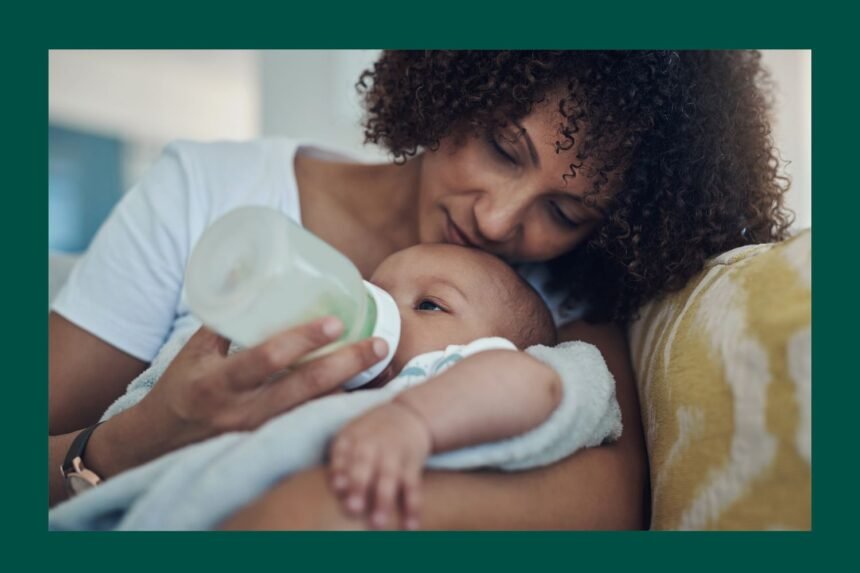
- According to a report from The Motherless Mothers and Peanut, one-third of new moms start raising children without their own mother.
- If the mother is absent due to death, illness, or estrangement, the risk of postpartum depression may increase.
- Grief-aware care and building strong support systems can help mothers feel seen and supported during this major life transition.
Traditionally, a new mom’s own mother serves as a sturdy pillar and a soft landing place, all wrapped up in one. But new data suggests that’s not the case for many people. According to a report by The Motherless Mothers (TMM) and Peanut, an app that connects people through every stage of parenting, one-third of new moms begin motherhood without their mother by their side.
The findings also suggest that people raising children without their mothers due to death, illness, or estrangement have higher rates of depression and other perinatal mental health conditions.
“Mothers usually provide invaluable comfort, especially when everything is new and overwhelming,” says Nona Kocher, MD, MPH, a board-certified psychiatrist based in Miami. “During pregnancy and the early stages of childbirth, such support is more important than ever.”
Troublingly, many mothers reported not feeling supported in their struggle, especially during medical visits. According to the report, mothers’ health can be improved by asking just one question during a health check: “Do you have access to support from your mother or maternal figure?”
But experts share that there are ways for mothers who hear news like this to find support elsewhere and improve their postpartum experience.
Why is raising children without a mother so difficult?
The global report, which surveyed more than 2,300 respondents, found that absentee parenting has a significant impact.
- 81% of respondents reported having a perinatal mental health condition, more than four times the U.S. average of 20%.
- Specifically, single-parent families in the United States are 5.4 times more likely to experience perinatal depression than the national average of 12.5% reported by the Centers for Disease Control and Prevention (CDC).
- 85% of respondents said becoming a mother brought back their grief.
Kiana Shelton, LCSW, a certified therapist at MindPath Health, says these feelings are natural and even expected, since mothers are often the emotional source for their daughters during this transition.
“During pregnancy and postpartum, when everything feels uncertain, mothers can bring some normalcy,” Shelton explains. “A lack of maternal presence not only results in a lack of support, but also a lack of grounding. This absence can intensify feelings of isolation, anxiety, and identity confusion, all of which can increase the risk of perinatal/postpartum depression.”
Katherine M. Cunningham, M.D., chief of psychiatry at Hackensack Meridian Maritime University Medical Center, agreed, saying that feelings of loss and lack of social support are among the strongest indicators of postpartum depression. And because mothers often provide the necessary instrumental support and emotional scaffolding during the postpartum period, parenting without a mother leaves a gaping hole for many.
“Instrumental support includes practical help with caring for a newborn, feeding, and other household chores to alleviate stress and reduce sleep deprivation,” explains Dr. Cunningham. “Emotional scaffolding includes feeling safe and accepted, modeling the maternal caregiver role, and a sense of community and family identity.”
Kiana Shelton, LCSW;
When a mother’s presence is missing, not only is there a lack of support, but there is also a lack of grounding. This absence can intensify feelings of isolation, anxiety, and identity confusion, all of which can increase the risk of perinatal/postnatal depression.
— Kiana Shelton, LCSW,
Loss doesn’t just mean death
Importantly, Peanuts and TMM, a registered charity and community for mothers navigating parenting, define maternal loss broadly to include death, illness, distance and estrangement. The latter is important to be aware of, as research shows that about 6% of adults are estranged from their mothers.
“An estrangement is different from separation due to death or illness because it requires a choice by the daughter, the mother, or both,” says Geralyn Fortney, PMH-C, a licensed professional counselor and director of Thrive Works Community Clinic. “It raises questions and sometimes guilt, shame and responsibility.”
After giving birth, some people experience a strong desire to contact their estranged mother, “even if they know it’s not in their best interest,” Fortney said. “People are craving that connection, and it can be overwhelming.”
When it comes to illness, it’s a gray area for new mothers and can be very difficult to deal with, especially when it comes to helping care for a parent. “If the illness is severe, anticipatory grief may also be present,” Fortney added.
Of course, death is permanent, and Fortney isn’t surprised that the perinatal period has reignited mothers’ grief.
“Even though people think they’ve ‘moved on’, the birth of a child often triggers them again,” Fortney says. “The desire to reach out, to share this milestone, to have the mother come can be overwhelming.”
Unsurprisingly, mothers are not finding enough support
Raising a child without a mother is difficult enough. However, women who responded to Peanut and TMM’s new survey shared that they did not receive support from those involved in their care. About 74% said their health care provider had never asked them if there was support available for their mother, and only half of those asked said they had received meaningful support.
“The sadness of becoming a mother while your mother is away is rarely recognized in our culture,” says Emily Guarnotta, a psychologist and founder of Phoenix Health. “When a baby is born, society focuses on the newborn instead of the mother. There is also a lot of discomfort in our culture when it comes to grief and family issues.”
But Dr. Guarnotta says not asking about a mother’s needs or pretending that everything is okay promotes loneliness and isolation. She and other experts believe that grief-sensitive care is necessary during this time. This is something TMM and its co-founder Adina Belloli (MA, MSc, GMBPsS, UKCP) have been working hard to raise awareness of.
“Grief-sensitive care means recognizing that grief is not a secondary issue,” Dr. Kochel explains. “It’s part of the picture, especially during major life transitions like births and losses.”
Grief-aware care involves providers listening non-judgmentally, validating complex emotions, and tailoring care to where people are emotionally. Dr. Kochel explains, “This kind of approach helps people feel supported rather than ignored, and can make a huge difference to their mental and physical recovery.”
How mothers survive postpartum without their mothers
While it would be great if grief-sensitive care was integrated into postnatal care, this is usually not the case. But experts say new moms can pivot in case they feel sad about their mother’s absence.
Seek help early and often
Dr. Cunningham encourages moms to tell their health care provider right away if “sadness, guilt, or anxiety start to get in the way of joy.”
“Screening and treatment for perinatal depression is safe and effective, and reaching out is not a weakness,” Dr. Cunningham emphasizes. “Those who have lost their mother have a higher baseline risk of postnatal depression, and by accessing services early, symptoms are less likely to last or become severe.”
Dr. Katherine M. Cunningham
Those who have lost their mothers have a higher baseline risk of postpartum depression, and by accessing services early, symptoms are less likely to last or become severe.
— Katherine M. Cunningham, MD
Find a community
Shelton suggests building a “mothering village” that will look different for everyone and potentially include virtual support.
“Having community connections allows others to identify hidden risks early and connect mothers to appropriate grief and support resources,” Shelton says. “It’s not about replacing your mother, it’s about finding a way to have your needs met. Mother figures can look like friends, doulas, elders, or even online groups of motherless mothers.”
Dr. Cunningham also points out that “even just a few therapy sessions or attending a support group can help you feel less alone and feel more confident in your new role.”
mom herself
The idea of raising your own children “may sound strange,” Dr. Guarnotta says, but it can help.
“Giving yourself the compassion, love, and approval that you crave can be very powerful,” she says. “Speak kindly to yourself, acknowledge your needs, and give yourself permission to rest and accept help.”
If your mother is or was a positive force in your life, you might ask yourself, “What would my mother say to me now?” Dr. Guarnotta says.
Plan for times of grief
Although sadness can creep in, experts say periods of deep grief are more predictable, such as around milestones, birthdays, and anniversaries.
“Being aware of them is a big step in preparation,” Fortney says.
She recommends focusing on self-care, taking a step back from these difficult days, and doing something in memory of your mother.
Make room for a range of emotions
“Becoming a mother often brings sadness and joy together,” Dr. Kochel says. “Having both present without judgment helps reduce shame and emotional turmoil.”
Fortney agrees, encouraging mothers to stick to “both.”
“Feel the sadness and the happiness,” she says. “It’s natural to feel guilty for experiencing sadness when you ‘should’ be happy. Two things can be true.”